Psychology · cognition · behavior
About Research
Disaster and safety education should move beyond presenting knowledge toward context-sensitive decisions and action. These connected inquiries link psychology, cognition, and behavior with information technology and systems.
RESEARCH NARRATIVE
Research pathway
Human-factors theory moves through disaster, social, and technological contexts toward testable educational practice.
Risk · disaster information · constraints
Design · practice · training
Decisions · improvement · broader adoption
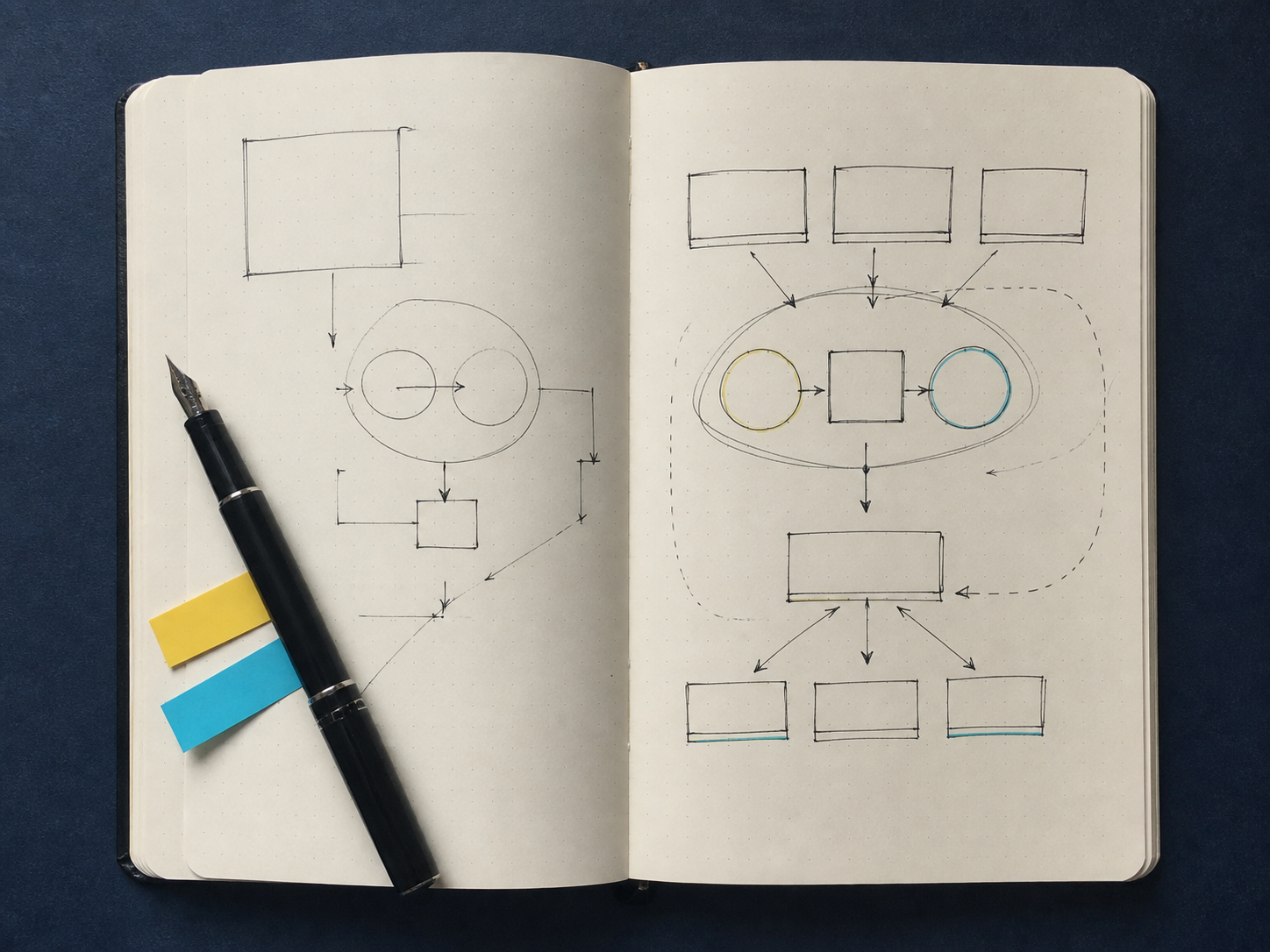


Five questions for advancing disaster and safety education
- 01
How can the principles of educational systems for disaster and safety education be clarified?
- 02
How can methodologies connect system development with educational practice?
- 03
How should AI and extended reality be applied or extended for defined educational purposes and conditions?
- 04
How can psychology, cognition, and behavior be modeled, observed, and interpreted?
- 05
How should learning and action be evaluated, and what conditions support broader adoption?
ACTION OUTPUT
ActionCard
Research insights become a shareable field resource that supports clear action across languages, settings, and connectivity constraints.
Prepare a context-specific cardReview the action and rationale
ActionCard☰
DESIGN MOVE
Make the next action visible.
◎
Focus
Name one action and who will take it.
- Check the local context
- Verify the source
- Share the decision
●Home□Library○Reflect•••More
LIVE PREVIEW
Move from an insight to a usable action.
Open the current ActionCard in a new window, or review the design and implementation process.
Open ActionCard ↗Review Practices & Tools →Moving disaster and safety education from knowledge to action
This portfolio examines learning environments that help people turn safety information into context-sensitive decisions amid natural and human-induced disasters, social instability, and rapid technological change.
Goal-Based Scenarios (GBS), Self-Regulated Learning (SRL), and cognitive-load research provide a foundation for connecting psychology, cognition, and behavior with disaster information and educational systems. The three themes below cycle through design, educational practice, and evaluation.
Psychology, cognition, behavior, and context gaps
Target and challenge
In a Story-Centered Curriculum (SCC), the scenario role may differ from the learner’s own situation. Disaster and safety education must examine how this gap influences the interpretation of risk information, self-efficacy, decision-making, and action.
Approach and design-based research
GBS and the forethought, performance, and self-reflection phases of SRL inform possible bridging activities and metacognitive prompts. Design-Based Research (DBR) connects the modeling, observation, and interpretation of human factors with iterative improvement in educational practice.
Disaster information and a traceable knowledge workflow
Challenge and objective
Mixing unverified AI-generated material into disaster information or research records can obscure sources, adoption rationales, and decision pathways. This theme examines principles that separate convenient AI assistance from information literacy, information ethics, security, source verification, and human review.
System architecture and in-situ reflection
The proposed workflow connects bibliographic records, research notes, and change history so that candidate information, source checks, human review, and formal records remain traceable.
Smart glasses and extended reality may support in-situ rationales or simulated experience. Their use remains a research possibility that requires prior evaluation of recognition errors, attention diversion, privacy, accessibility, and security.
Mobile-first disaster and safety ActionCard
Design context: language, connectivity, and time constraints
ActionCard is a digital job aid intended to support disaster-information checks and initial decisions in multilingual or connectivity-constrained settings. Its current interface and functions are subjects for design and evaluation; the proposed applications on this site are not evidence of verified effects.
Educational-technology design and evaluation
Low-cognitive-load presentation, offline use, multilingual display, local configuration, and post-drill reflection are treated as design candidates. Evaluation should distinguish function, decision support, accessibility, information ethics, security, and the conditions required for broader adoption.
View ActionCard practices and tools →Key References
- Anderson, T., & Shattuck, J. (2012). Design-based research: A decade of progress in education research? Educational Researcher, 41(1), 16–25. DOI
- Schank, R. C., Fano, A., Bell, B., & Jona, M. (1994). The design of goal-based scenarios. The Journal of the Learning Sciences, 3(4), 305–345. DOI
- Zimmerman, B. J. (2002). Becoming a self-regulated learner: An overview. Theory Into Practice, 41(2), 64–70. DOI
- Suzuki, K., & Nemoto, J. (2013). Aiming at both educational improvement and research achievement: Let us write a design-based research paper [Review]. Competency Development for Medical Professionals, 2(1), 45–53. (In Japanese)
- Takeoka, A., Nemoto, J., Kita, T., & Suzuki, K. (2011). Finding the “gap” between a learner’s real-world context and scenario context. Proceedings of the 18th Annual Conference of the Japan Association for Educational Media Studies, 163–164. (In Japanese)
Continue from research to practice and evaluation
Explore ActionCard’s design, operating process, evaluation targets, and the boundary between expected effects and demonstrated outcomes.
Practices & Tools →